
Customer experience design
I work in hospitality and practice UX design, so I see restaurants from both sides: the guest's and the operator's. Every idea on this page comes from real service experience, shaped by design thinking and refined through research across 10+ Sydney venues.
It gives you a bird’s-eye view of the entire guest experience. Seen from above, the bottlenecks, weak spots, and untapped opportunities stand out, and each one becomes something you can act on.
( 01 / 03 )
Customer journey
Mapping the customer journey, stage by stage.
A customer journey is the full story of how a guest interacts with your restaurant. Mapping it out turns a blur of daily service into something you can see, improve, and design around.
Customer Journey
( 02 / 03 )
Stages categorisation
Categorising customer journey stages by function.
Not every stage is the same kind of moment. Some shape how a guest feels (Experience), some are where they make a choice (Decision), and some are a short window just before that choice, where a nudge can help (Pitch). Splitting the journey this way makes it possible to actually design for each moment differently.
( 03 / 03 )
Stage touchpoints
ONE STAGE, MANY TOUCHPOINTS.
Every stage in the journey is built from several touchpoints, the individual places where a guest interacts with your restaurant. To show how deep the mapping goes, here is one stage broken down as an example.
Touchpoint
Before booking, guests move between Search, Instagram, your website, and reviews. Each touchpoint builds on the others, so the more consistent your presence across all four, the more confident a guest feels making the booking.
( 04 )
Stages categorisation
Applying the Framework: What 10+ Sydney Restaurants Have in Common
I applied this same framework, mapping stages, spotting decision points, isolating touchpoints, to restaurants across Sydney. The goal wasn't just to map each one individually, but to see whether the same drawbacks kept showing up across different venues. They did, almost every restaurant shared the same handful of recurring issues, listed below.
( 05 )
Touchpoint in practice
IMPROVING the TOUCHPOINT: restaurAnt WEBSITE.
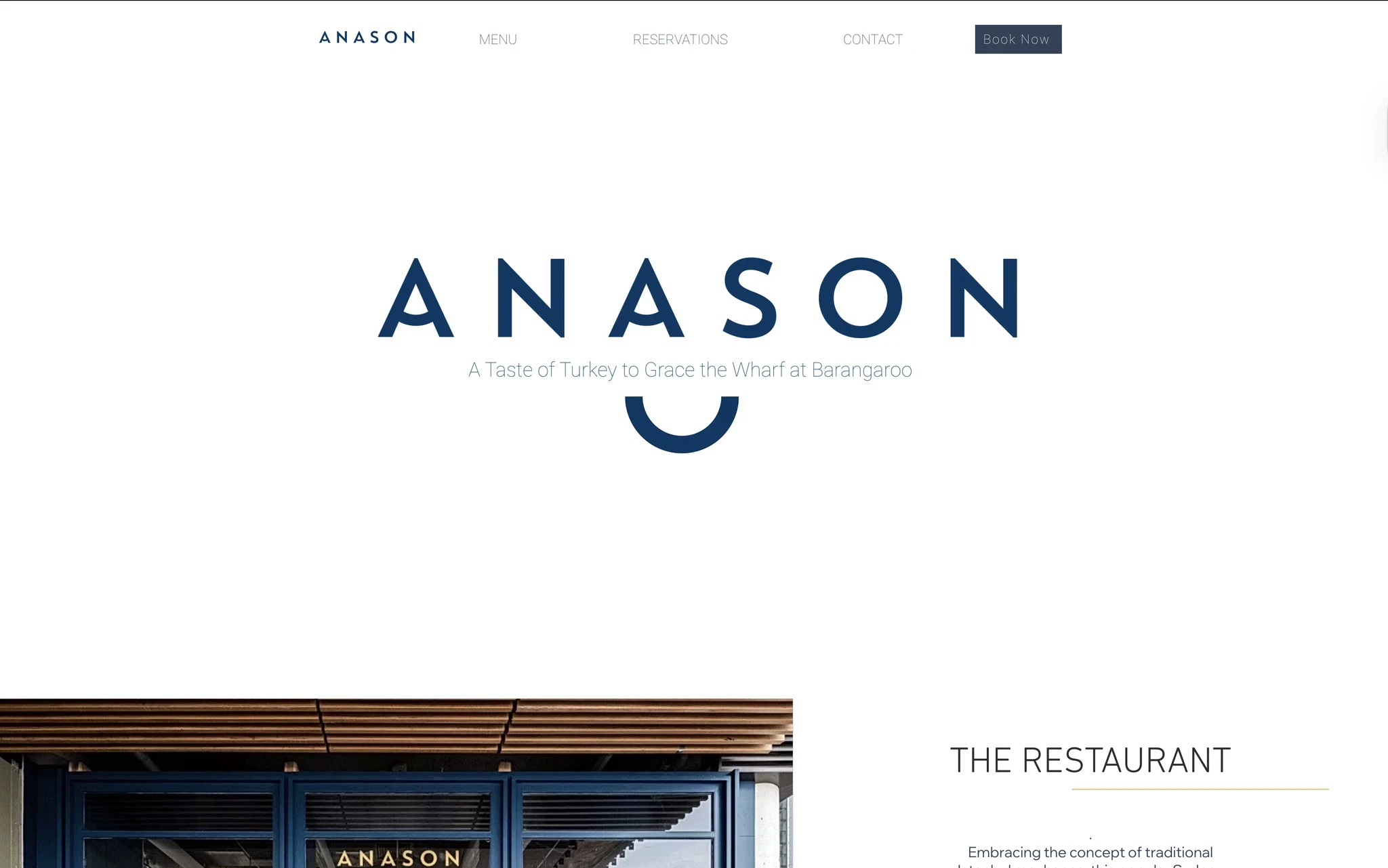
Improving a restaurant doesn't have to start with everything at once. Each touchpoint can be fixed on its own, and each fix has a measurable effect on the stage it belongs to. Here's one example: the website, a Pre-visit touchpoint that decides whether a guest books or keeps going.
More bookings, fewer lost guests
81% of diners check a restaurant's website before visiting, according to OpenTable. When that site is slow, outdated, or hard to use, guests quietly move on. A clear, fast website with easy booking turns that visit into a reservation.
Your first sales pitch
The website is the 1st pitch in the guest journey. By highlighting signature dishes, set menus, promotions, and private dining, it shapes what guests plan to order and spend long before a waiter says hello.
A brand story you fully control
Social platforms decide what guests see and when. A website is the one space where your atmosphere, story, and signature dishes are presented exactly as you intend, building trust before a guest even walks in.